Home β†’ Monthly Releases β†’ November 2026

November 2026

The most anticipated nonfiction books coming out this month

November 2026 Β· 9 Books

November is about instruments and the minds that use them: Greene on awe, Pal on the end of the economic operating system, Gleick on the telephone, the authorized life of Hawking, and five more. Nine books. No filler. My Pick of the Month: The Law of the Sublime.

Last updated: November 2, 2026 Β· Final list, with the Pick of the Month and the full video breakdown.

Watch the full breakdown on YouTube

Who is Bjorn?

I'm Bjorn - I've reviewed 300+ nonfiction books over the last 10 years on YouTube (18k subscribers) and X (47.9k followers). Every month I dig through the new releases so you don't have to. These are my honest picks. Nine this month, zero filler.

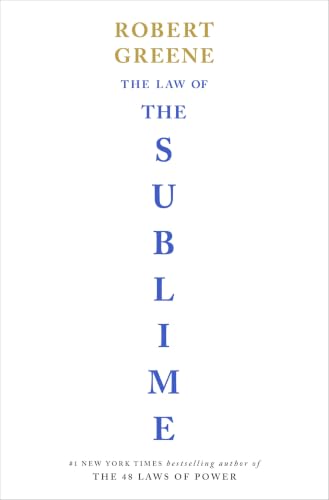
The Law of the Sublime by Robert Greene
Bjorn's Pick of the Month 01
The Law of the Sublime
Robert Greene
Human Nature / Philosophy / Self-Mastery November 10

From the author of The 48 Laws of Power and The Laws of Human Nature. After seven years, Greene turns from power and social strategy to awe - reconnecting with nature, art, science, childhood perception, and the fringes of consciousness. Stories, exercises, and meditations. The same move Duckworth made with Situated: an author complicating his own reputation. 496 pages. Published by Viking.

πŸŽ™οΈ Bjorn's take: "The Laws of Human Nature is always in the top 5 when I talk about my favorite books of all time. So a new Greene is a big event for me. Expectations are sky high for this one. If you liked The Denial of Death or Four Thousand Weeks, this is the same inner territory."
Read if:
  • You finished The Laws of Human Nature and wanted the inner life, not another strategy manual
  • You liked Mastery, Four Thousand Weeks, or The Denial of Death
  • You want a long book that tries to change how you see, not how you win
Buy on Amazon β†’ Read Laws of Human Nature Review β†’ Human Nature Books β†’
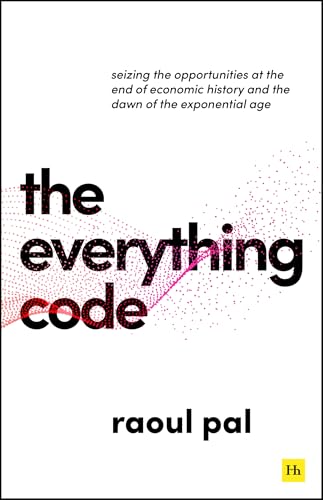
The Everything Code by Raoul Pal
02
The Everything Code
Raoul Pal
Money / Economics / Exponential Age November 3

First book from the Real Vision founder. The framework: demographics force debt-driven liquidity; that liquidity is the hidden chart under almost every major asset; technology and crypto are the life rafts. Thirty years of macro compressed into one thesis. Sits alongside The Bitcoin Standard and The Sovereign Individual - a builder's map of a broken monetary system, actionable without being a get-rich pamphlet. Published by Harriman House.

πŸŽ™οΈ Bjorn's take: "We have two big factors to take into account when planning for our financial future as we move deeper into the singularity. The millennials will inherit the boomer’s fortunes (hint: millennials will not invest in bonds), and we have a technological revolution going on with AI that hits the world like a β€œsupersonic tsunami”. If you liked The Bitcoin Standard or The Sovereign Individual, this looks like the macro companion to both. Less ideology, more mechanics."
Read if:
  • You want the macro chart that supposedly explains why every asset rhymes
  • You liked The Bitcoin Standard or The Sovereign Individual
  • You think demographics-plus-debt is the story under the noise

Buy on Amazon β†’ Money & Freedom Books β†’
The Telephone: A New History by James Gleick
03
The Telephone: A New History
James Gleick
Technology / History of Ideas / Human Nature November 10

Gleick wrote Chaos and The Information. Here the telephone becomes the instrument that remade intimacy, monopoly, Bell Labs, and the information age - speech at a distance as a civilisational break, not a gadget history. If October's The New Dark Ages diagnosed what screens are doing to us, this is the prequel: what the wire did before the screen existed. Published by Farrar, Straus and Giroux.

πŸŽ™οΈ Bjorn's take: "Gleick has a habit of taking something you think you understand and making it strange. The telephone was the first time people could talk across distance in real time. I’m noticing myself jumping into the reading theme I've decided to focus on next year early. The theme is β€œThe building blocks of civilization” and it already started when I read about the electrical wires that connect us all in Gretchen Bakke’s The Grid last month. This one is going on my to read list."
Read if:
  • You liked The Information, Chaos, or The Shallows
  • You want a technology understood as a change in human nature
  • You want the prequel to October's New Dark Ages - what the wire did before the screen
Buy on Amazon β†’
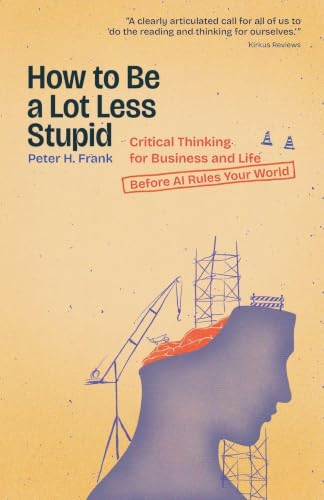
How to Be a Lot Less Stupid by Peter H. Frank
How to Be a Lot Less Stupid: Critical Thinking for Business and Life Before AI Rules Your World
Peter H. Frank
Critical Thinking / Business / AI November 1

When AI will happily think for you, critical thinking stops being optional. Peter H. Frank, a former New York Times business reporter and lecturer in critical thinking, makes the case for thinking from first principles - and gives you the tools to actually do it.
πŸŽ™οΈ Bjorn's take: "My reason for liking this book is that it is about thinking from first principles, in an age where mastering critical thinking is a non-negotiable skill that everyone needs to master."
Buy on Amazon β†’
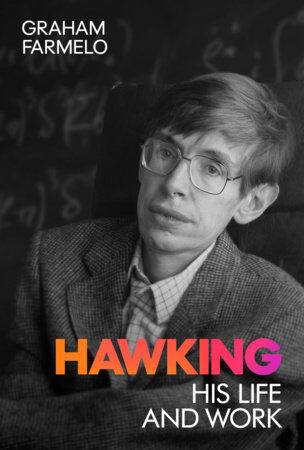
Hawking by Graham Farmelo
04
Hawking: His Life and Work
Graham Farmelo
Biography / Science / Physics November 24

The authorized biography. Farmelo is a physicist and a Costa Award-winning biographer, and he works from his subject's family papers: letters and diaries from Hawking's parents that have never been seen before, plus interviews with family, friends and colleagues. Black holes, the early universe, global fame - and the decades Hawking lived after an ALS diagnosis in his early twenties that was supposed to leave him a few years. 608 pages. Already out in the UK (John Murray, September 24). US edition from Bantam.

πŸŽ™οΈ Bjorn's take: "I've reviewed A Brief History of Time, so the man behind it is the obvious next stop. I've read it two times even. An authorized biography built on family letters and diaries nobody has seen is a different animal from the legend. What pulls me in is the life after the diagnosis: decades he was never supposed to get."
Read if:
Buy on Amazon β†’ Read A Brief History of Time Review β†’ Best Biographies β†’
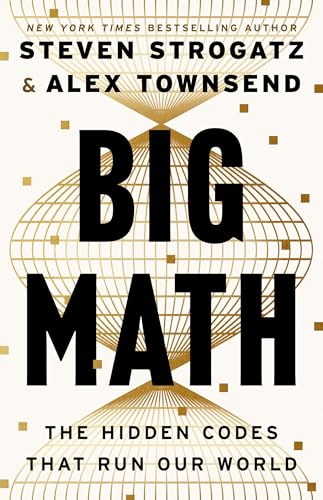
Big Math by Steven Strogatz and Alex Townsend
05
Big Math: The Hidden Codes That Run Our World
Steven Strogatz & Alex Townsend
Science / Mathematics / AI November 10

Strogatz (Infinite Powers, The Joy of X, Cornell) and Townsend on the small set of ideas - mostly linear algebra - underneath Netflix recommendations, medical imaging, GPS, and AI. The sting: the maths is drifting beyond the grasp of the people who built it, and quantum makes it worse. The layer underneath the hype, for anyone who wants to know what "the model" actually is. 304 pages. Published by Little, Brown.

πŸŽ™οΈ Bjorn's take: "After diving into CODE by Petzold, a book that is now looking to get a spot in my book of the year lineup, I realize that I can make these seemingly complicated topics make sense in my little everyman mind. Petzold’s book showed me that I could understand computer hardware and now I'm ready to take on math (which has never been my strong suit). This book is promising to make it accessible and my brain is ready for it."
Read if:
  • You want to know what "the model" actually is, underneath the hype
  • You liked Infinite Powers or The Structure of Scientific Revolutions
  • You suspect the discovery bottleneck is linear algebra, not magic
Buy on Amazon β†’ AI Founders Reading List β†’
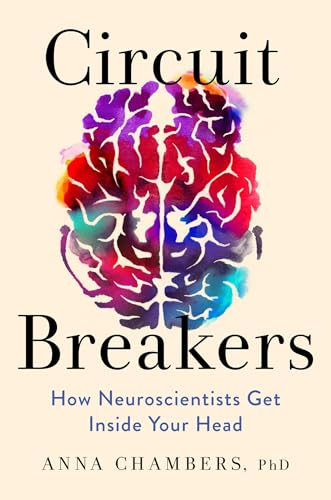
Circuit Breakers by Anna Chambers
06
Circuit Breakers: How Neuroscientists Get Inside Your Head
Anna Chambers
Psychology / Neuroscience November 3

Harvard neuroscientist walks into the lab and shows the tools - implants, laser-controlled neurons - plus the grind of the actual work. How we know what we claim to know about the brain. Not another "your brain on X" airport book - the methods book underneath BookLab's usual ideas-first psychology lane. 288 pages. Published by Abrams Press.

πŸŽ™οΈ Bjorn's take: "I've reviewed a lot of popular brain science, and Behave and Determined by Sapolsky are two of my favourites. Those books tell you what the brain does. This one tells you how anyone figured it out: the implants, the lasers, the long grind in the lab. This is a look at how the sausage gets made."
Read if:
  • You want the lab, not the TED talk
  • You liked Behave or Determined by Sapolsky
  • You're suspicious of neuroscience headlines and want to see the methods
Buy on Amazon β†’
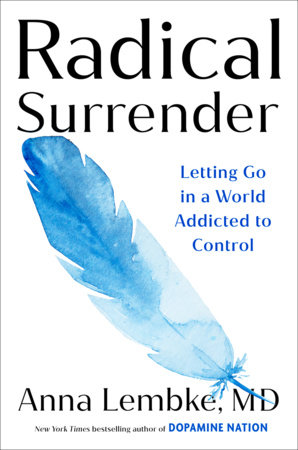
Radical Surrender by Anna Lembke
07
Radical Surrender: Letting Go in a World Addicted to Control
Anna Lembke
Psychology / Human Nature / Meaning November 10

From the Stanford psychiatrist who wrote Dopamine Nation. The argument: anxiety, loneliness, boredom and shame grow from the same root - we can't tolerate uncertainty, so we try to control everything. Her answer is surrender: admitting willpower isn't enough, accepting a force bigger than yourself, and moving from mastery toward mystery. Built on her own experience of loss, plus neuroscience. It lands the same month Greene turns from strategy to awe at #01 - two authors arguing that more control isn't the answer. 272 pages. Published by Dutton.

πŸŽ™οΈ Bjorn's take: "It's a delicate balance to surrender to the world and be 100% responsible for your outcomes in life. I think this book helps us balance the two. My thoughts go to the Stoics' dichotomy of control: some things we can control, and are up to us, other things are out of our control. Focus your energy on the former. I'm interested in hearing Lembke's ideas about surrender. I'm due for a book like this one."
Read if:
  • You read Dopamine Nation and wondered what comes after the detox
  • You liked Four Thousand Weeks, limits accepted, not fought
  • You suspect more willpower isn't the answer
Buy on Amazon β†’ Books for Overthinkers β†’ Human Nature Books β†’
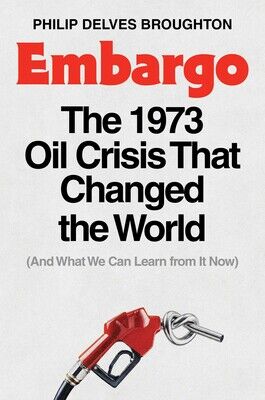
Embargo by Philip Delves Broughton
08
Embargo: The 1973 Oil Crisis That Changed the World (And What We Can Learn from It Now)
Philip Delves Broughton
History / Geopolitics / Money November 17

In 1973, King Faisal of Saudi Arabia cut off oil to the United States, and the world found out how much of its prosperity ran through the Middle East. Broughton - former Telegraph correspondent, FT and Wall Street Journal writer, Harvard MBA - tells it through the people in the room: Faisal, oil minister Ahmed Zaki Yamani, Henry Kissinger and William Simon. Secret negotiations, diplomacy, violence. Read it next to Pal at #02: one shock that showed who really runs the economic operating system. 384 pages. Published by Simon & Schuster.

πŸŽ™οΈ Bjorn's take: "And here we are today. For that reason, Embargo could offer lessons that can be relearned today about how an oil crisis can rewire the world forever. The current oil crisis is ongoing and the outcome is yet to be determined. I think this might be one of the most acutely relevant reads on this month's list for understanding the current macro situation."
Read if:
Buy on Amazon β†’ Read Energy and Civilization Review β†’ Money & Freedom Books β†’
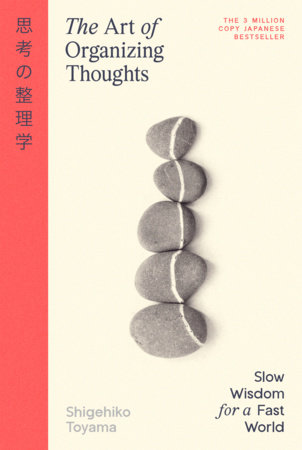
The Art of Organizing Thoughts by Shigehiko Toyama
09
The Art of Organizing Thoughts: Slow Wisdom for a Fast World
Shigehiko Toyama
Thinking / Philosophy / Productivity November 3

A Japanese bestseller from 1983, in English for the first time. Toyama's claim: thinking is a skill you build on purpose, and piling up knowledge doesn't turn into wisdom by itself. He splits people into gliders, who only move when something tows them, and airplanes, who fly under their own power. The habits are slow on purpose - let ideas mature, sleep on problems, forget selectively. 272 pages. Published by Ten Speed Press.

πŸŽ™οΈ Bjorn's take: "The hook for me is the split between gliders and airplanes: people who only move when there is a whip on their back, and people who use true agency. Most of us consume far more than we ever think through. This book tells us to slow down, sleep on problems and let ideas mature. That feels like the right antidote to hustle culture. If Deep Work, and deep thought, mattered to you, this is a companion on the thinking side."
Read if:
  • You liked Deep Work or The Shallows
  • You take in a lot of information and want to do more with it
  • You want an antidote to hustle culture that isn't another productivity system
Buy on Amazon β†’ Read Deep Work Review β†’ Productivity & Focus Books β†’

πŸ“¬ Know a Book We Missed?

If there's a nonfiction release this month that deserves a spot on this list, let me know - I read every suggestion.

Tell me on X β†’ Submit a Book β†’

Browse Other Months

πŸ“… January 2026 πŸ“… February 2026 πŸ“… March 2026 πŸ“… April 2026 πŸ“… May 2026 πŸ“… June 2026 πŸ“… July 2026 πŸ“… August 2026 πŸ“… September 2026 πŸ“… October 2026 πŸ“… December 2026 πŸ“š Great Books List πŸ“š All Monthly Releases
↑ Top