
HomeMonthly Releases → August 2026

Best Nonfiction Releases — August 2026

The most interesting nonfiction books coming out this month

📅 August 2026 · 5 Books

What would Hannah Arendt say about the world we built? What happens when algorithms replace legislators? How much of your life has the government stolen quietly from you by paperwork? Can your body actually perform better while doing less? And what if most of the side effects you've experienced were invented by your own brain? Five books, no fillers. Let's go.

Last updated: July 17, 2026 · Pick of the Month: Hannah Arendt: A Life of the Mind

I'm Bjorn — I've reviewed 300+ nonfiction books over the last 10 years on YouTube (17k subscribers) and X (45k followers). Every month I dig through all the new releases so you don't have to. These are my honest picks.

Watch the full breakdown — filmed out in the Swedish forest 🌲

Hannah Arendt: A Life of the Mind by Thomas Meyer
🏆 Bjorn's Pick of the Month 01
Hannah Arendt: A Life of the Mind
Thomas Meyer (translated by Shelley Frisch)
Biography / Philosophy / History August 11

The definitive intellectual biography of Hannah Arendt, one of the most important philosophers of the twentieth century. Based on newly discovered archival materials, Thomas Meyer — a Munich professor of philosophy and the editor of Arendt's German writings — traces her journey from Königsberg to Paris to New York, from imprisonment by the Gestapo to the landmark publication of The Origins of Totalitarianism in 1951. At the center: her lifelong philosophical debate with Martin Heidegger, whose Nazism was a permanent challenge for her — both personally and intellectually.

🎙️ Bjorn's take: "I have Arendt's The Origins of Totalitarianism on my reading list — it's been sitting there for years. This biography feels like the perfect way in. And here's what makes this list feel like it was designed on purpose: Jill Lepore's book (#2 on this list) is explicitly inspired by Arendt's Origins of Totalitarianism. Two books, one intellectual thread. Arendt was thinking about what happens when the machinery of modern life reshapes human existence — in the 1950s. We're living in her prediction. I really want to know more about this person. She's been an important and influential thinker and I know zip about her."
Read if:
  • You're interested in philosophy, totalitarianism, and how great thinkers respond to dark times
  • You want to understand Arendt before (or alongside) reading her work
  • You enjoy serious intellectual biography — this is 560 pages and earned a Kirkus nod
Buy on Amazon →
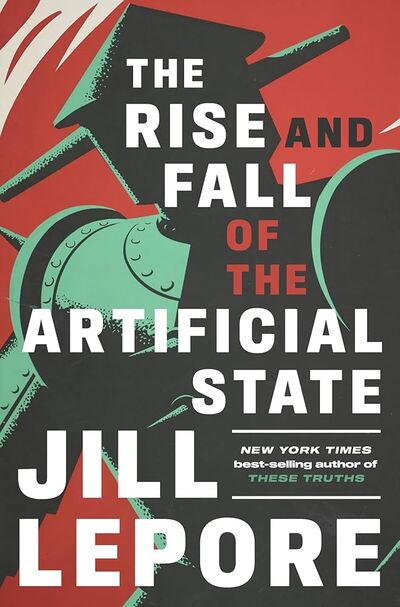
The Rise and Fall of the Artificial State by Jill Lepore
02
The Rise and Fall of the Artificial State
Jill Lepore
History / Technology / Politics August 25

Harvard historian and New Yorker staff writer Jill Lepore — author of the bestselling These Truths — makes the case that we are now living under the Artificial State: rule by automation, algorithms, and machine government. Not in the future. Now. Inspired by Hannah Arendt's The Origins of Totalitarianism, Lepore traces how political campaigns became attention-mining operations, how multinational media corporations replaced public discourse, and how the liberal nation-state is being hollowed out by billionaire technocrats. Jaron Lanier calls her "our most vital historian" and says this book is "the voice of sanity."

🎙️ Bjorn's take: "This is the book I'm most excited about this month alongside the Arendt biography — and the connection between the two is what makes this list feel intentional. Last month I had Roopika Risam's Data Empire on the list, which traced surveillance back 11,000 years. Lepore takes a different angle: instead of data as the weapon, she's looking at the state itself as the thing being replaced. Algorithms aren't just surveilling us — they're governing us. And she argues, crucially, that this isn't inevitable. Other systems that looked permanent — feudalism, fascism, slavery — were dismantled too. That's the part that makes this more than a doom book. I absolutely love the cover of this book."
Read if:
  • You're concerned (or fascinated) by AI's growing power over democracy and public life
  • You enjoyed Data Empire, The Age of Surveillance Capitalism, or Homo Deus
  • You want historical depth, not tech-bro hot takes — Lepore is a Harvard historian, not a futurist
Buy on Amazon →
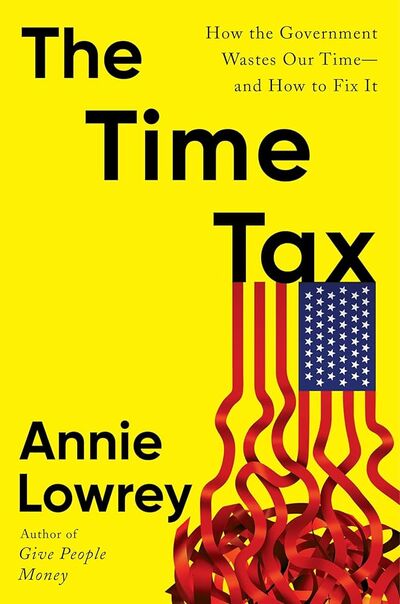
The Time Tax by Annie Lowrey
03
The Time Tax: How the Government Wastes Our Time — and How to Fix It
Annie Lowrey
Economics / Politics / Society August 25

Annie Lowrey — Atlantic staff writer and author of Give People Money — has given a name to something you've felt your entire life: the time tax. The paperwork, the phone trees, the incomprehensible government forms, the hours lost navigating systems that are supposed to serve you. Lowrey traces the history of administrative burdens in America from the colonial era to today, showing how they were deliberately built as tools of discrimination — and how they now quietly steal time from everyone, especially the people who can least afford to lose it.

🎙️ Bjorn's take: "I'm attracted to this topic. It might be a little American-centric for those of us who aren't American, but it resonates. I remember when I started a company back in the day — the amount of bureaucracy, the hurdles and loops I had to jump through made me realize why not everybody does these things. And there's so many things I don't do because going through the administrative hoops just sucks. Last year I used Claude for my taxes and it was a blessing — went by in an hour. Some things are getting better. But Lowrey argues the system wasn't always this broken by accident. It was a design choice. That's the kind of structural critique I find genuinely interesting."
Read if:
  • You've ever lost half a day to a government form and wondered why it has to be this hard
  • You're interested in how systems quietly extract time and dignity from people
  • You enjoy economics with a human face — like Freakonomics, Nudge, or Bullshit Jobs
Buy on Amazon →
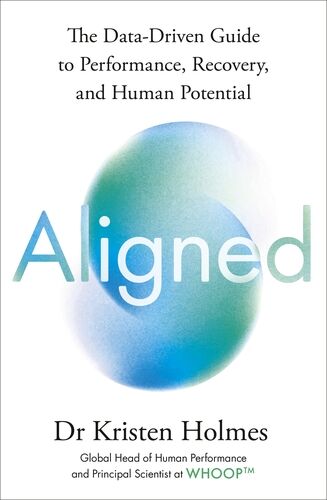
Aligned by Kristen Holmes
04
Aligned: How to Restore Your Body, Reclaim Your Energy, and Unlock Your Full Potential
Kristen Holmes, PhD
Psychology / Human Performance / Self-Mastery August 25

Kristen Holmes is a psychophysiologist and the VP of Performance at WHOOP — a company sitting on one of the world's largest physiological datasets. Her argument: the grind-harder culture of productivity is not just unsustainable — it's actively making you worse at what you do. True peak performance doesn't come from pushing harder. It comes from strategic restoration, recovery, and alignment between your body and your goals. Data-driven, evidence-based, and built on real physiology rather than hustle-culture mantras.

🎙️ Bjorn's take: "This is a book for you if you think the hustle culture and grind that you're going through actually hurts you more than it helps you — and you want evidence-based strategies for recovery and sustainable performance. If Holmes can back up the 'do less, perform better' argument with real data — not just vibes — then it's worth the read. If you enjoy books like Atomic Habits, Deep Work, or Why We Sleep — why we sleep is such a good book, many people are sleeping on it — then this is a book for you."
Read if:
  • You suspect that constant hustle is costing you more than it's giving
  • You want evidence-based strategies for recovery and sustainable performance
  • You enjoyed Atomic Habits, Deep Work, or Why We Sleep
Buy on Amazon → Read Atomic Habits Review →
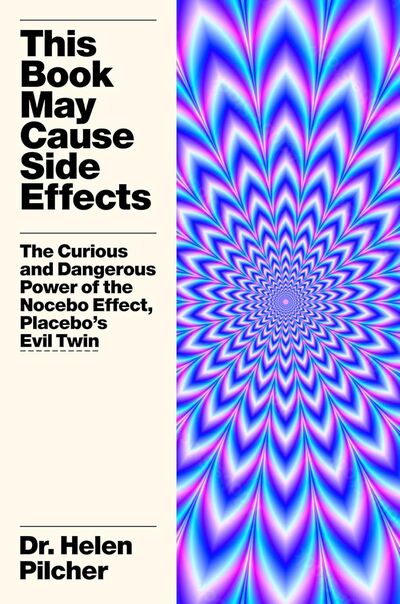
This Book May Cause Side Effects by Helen Pilcher
05
This Book May Cause Side Effects: The Curious and Dangerous Power of the Nocebo Effect, Placebo's Evil Twin
Dr. Helen Pilcher
Science / Psychology / Health August 25

You know the placebo effect — believe a sugar pill is medicine, and it works. The nocebo effect is its evil twin: believe something will hurt you, and it does. Neuroscientist Helen Pilcher digs into the science of how our expectations make us sick. If you experienced side effects from your COVID vaccine, there's a 76% chance they were caused by your belief that you'd experience them — not by the vaccine itself. Read the side-effects list on a new medication? You'll likely develop at least one. A wrong diagnosis can literally kill — not because of the disease, but because the patient believed the diagnosis. From hex deaths to TikTok "illfluencers" to Havana Syndrome, this is the story of what happens when your mind declares war on your body.

🎙️ Bjorn's take: "You know about the placebo effect — you believe a sugar pill is medicine and it suddenly works. The nocebo effect is its evil twin. Believe something will hurt you and it actually will. Helen Fischer goes into how our expectations make us sick. If you experienced the side effects from your COVID vaccine, that's a 76% chance they were caused by your belief that you'd experience them, not the vaccine itself. It's easy to read the list of side effects and feel like 'isn't my stomach a little bit messed up? Is my vision not a little bit blurred?' This became extra obvious during the pandemic. A fascinating and unsettling read."
Read if:
  • You're interested in the mind-body connection and how beliefs shape health
  • You enjoyed Outlive, Why We Sleep, or When the Body Says No
  • You want science writing that makes you question your assumptions about illness
Buy on Amazon → Read When the Body Says No Review →

Browse Other Months

📅 January 2026 📅 February 2026 📅 March 2026 📅 April 2026 📅 May 2026 📅 June 2026 📅 July 2026 📚 Great Books List 📚 All Monthly Releases