So Good They Can't Ignore You
Follow your passion is bad advice. Build rare skills first — then the passion follows.
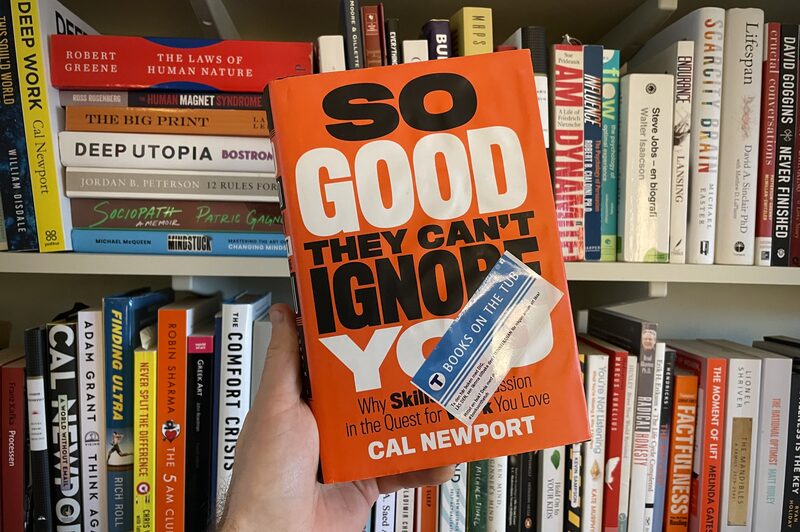
About the Book
Could it be that the more we focus on finding and following our passions, the more discontent we become with our work? Cal Newport makes the argument that you should throw passion aside and get really good first — then passion will follow.
So what makes for a rewarding career? Room for creativity, impact, and control are some important factors — and how do you attain that? You get really, really good at something rare and valuable.
Key Concepts
Craftsman Mindset vs. Passion Mindset
The Craftsman mindset focuses relentlessly on what value you can offer the world. The Passion mindset focuses on what the world can offer you. Newport argues the craftsman mindset is the path to work you love.
Deliberate Practice
"If you're not uncomfortable, then you're probably stuck at an 'acceptable level'."
Growth requires pushing beyond what feels easy. If you're coasting, you're not improving — you're just confirming what you already know and getting that warm feeling from having your pre-existing beliefs confirmed. That's not growth, that's stagnation.
The Law of Financial Viability
When deciding whether to follow an appealing pursuit, seek evidence that people are actually willing to pay for it. If you find that evidence, continue. If not, move on.
In the wake of Tim Ferriss' The 4-Hour Work Week, tons of people quit their jobs to become bloggers with passive income streams. Lifestyle design is cool and all, but many became disillusioned quickly when they realized how hard it is to make money online. Newport's prescription: make small bets. Run many small, concrete experiments instead of one really big one. Find out what people will pay for before betting your whole career on it. Some things will have to remain just a hobby — and that's fine.
💡 Key Takeaway
Make small bets. When you are transitioning into a new area of work, don't make one massive leap — make many small bets instead. Ask yourself: what are people really willing to pay you for? And prove it. Some things will have to remain just a hobby.
⚖️ Verdict
Here's the thing — I actually threw this book to the side halfway through. Not because it was bad, but because I caught myself doing exactly what Newport warns against: I was lying down reading, comfortable, pumping my head full of stuff I already knew and getting that warm feeling from having my pre-existing beliefs confirmed. So I took Newport's own advice, put the book down, and picked up something outside my comfort zone instead.
This is the perfect book for someone just starting their career. But for those of us with 15–30 years of work experience, we've probably already learned these lessons — maybe even the hard way — and have less to gain. Two years earlier it would have had enormous value to me. By the time I read it, I'd already worked through the books and concepts Newport references (Outliers, deliberate practice, Mastery, etc.).
If that's you, study these instead:
- 📖 Bhagavad Gita — freedom from outcome
- 📖 Mastery by Robert Greene — being persistent
- 📖 Outliers by Malcolm Gladwell — deliberate practice
- 📖 Turning Pro by Steven Pressfield — dealing with the resistance