The Life of Pythagoras
The man behind the theorem was a cult leader, an alleged miracle worker, and a student for 33 years before he ever taught anyone anything.
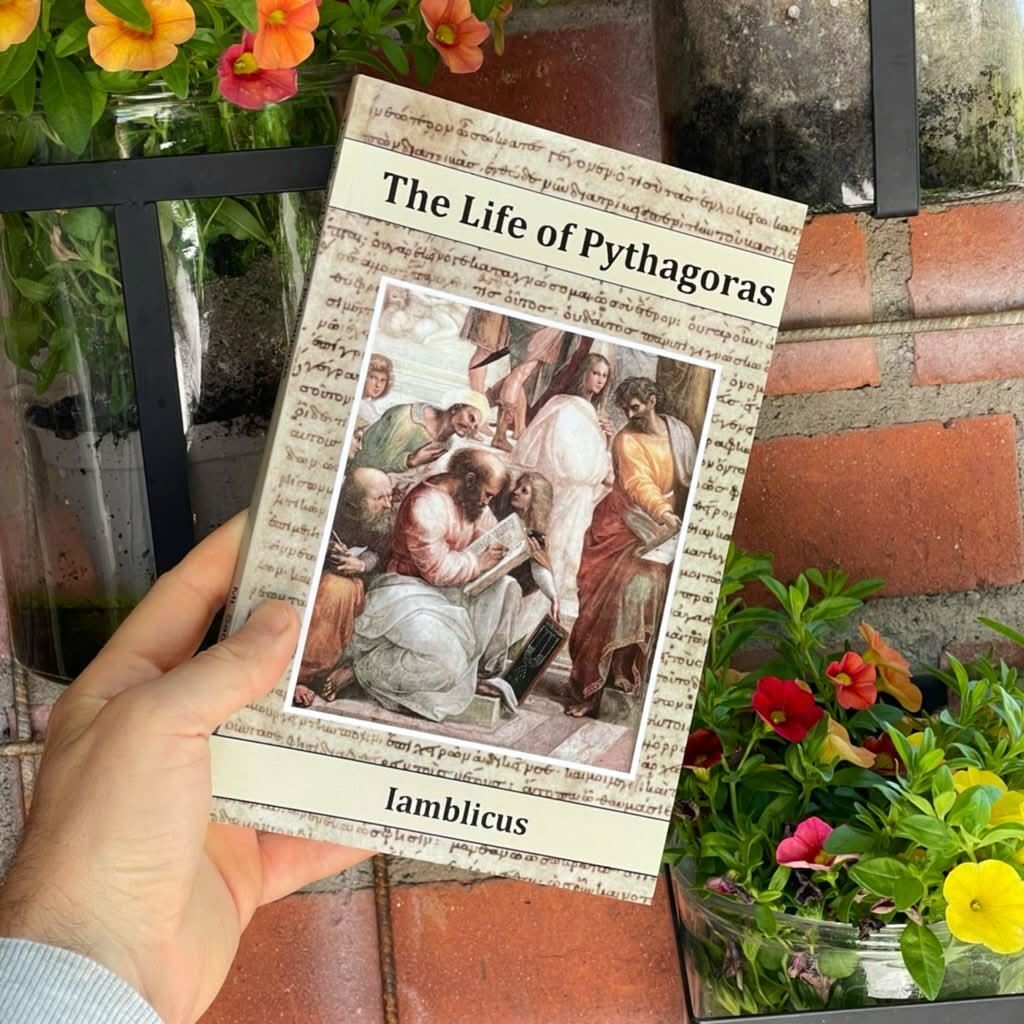
A New Sub-Genre: Ancient Dudes Writing About Other Ancient Dudes
I think I've discovered a new sub-genre: biographies about ancient dudes written by other ancient dudes. Iamblichus wrote this book about Pythagoras' life and teachings around 300 AD — about a man who lived roughly 800 years before him. Let that sink in. 😅
So how was it? Fascinating, often boring, and sometimes unnecessarily complicated. Classic ancient text vibes. Think of it as a cross between a philosophy textbook and a mythology book — with a pinch of cult recruitment manual thrown in.
The Eternal Student
What really struck me is how long Pythagoras studied before he ever taught anyone anything. The man traveled everywhere he thought he could find wisdom — Egypt, Babylon, wherever the best teachers were. His father believed the child was special and would move mankind forward, so he made sure young Pythagoras was exposed to the finest minds available.
By the time he was a teenager, he was already so well educated and well-behaved that older men honored and even reverenced him. And then he just kept going:
"He thus passed 22 years in the sanctuary of temples, studying astronomy and geometry and being initiated in no casual or superficial manner in the mysteries of the gods."
After those 22 years, he studied 12 more years in the sciences. That's 34+ years of learning before he started teaching. Thirty-four years. Most of us get impatient after a 20-minute YouTube tutorial. 😂
One lesson he picked up early — from the philosopher Thales — was the value of saving time. Avoid wine. Avoid meat. Avoid greediness. Confine yourself to food that's easy to prepare and digest. This made his sleep short and his health great. The man was optimizing his biology in 500 BC.
The Original Cult Leader
Here's where it gets wild. Pythagoras wasn't just a mathematician — he was regarded as a divinity. A straight-up cult leader with 2,000 followers (called "Hearers") who gathered in his auditorium to listen to him.
People looking for apprenticeship were studied and observed for a long time before getting the thumbs up. If they passed those initial tests, they had to spend 5 years in complete silence — learning to control their speech — before they were even allowed to see Pythagoras face to face.
Morals for youth? All apprentices must follow the footsteps of their seniors without contradiction — because when they themselves get older, they shouldn't have to fear injury from their juniors. There's a social logic to this that's actually pretty sharp.
He could allegedly tame wild animals just by talking to them. He whispered into an oxen's ear and told it not to eat beans — and the oxen obeyed for the rest of its life. He could also reportedly be in two places at once, and speak to rivers. 🤷
"Now I have this weird urge to join a sect."
📺 Video Review
The Pythagorean Schedule
Iamblichus even records Pythagoras' daily routine, and honestly it slaps:
- Solitary morning walk to a quiet place
- Time in the temples
- Workout
- Lunch — bread and honey
- Receptions of friends and strangers
- Group walks in parties of two and three
- The bath
- Dining, sacrifice, and supper before sunset
- Libations and reading
- Sleep
Reading before sleep. No wine. Simple food. Daily exercise. The man was living a better lifestyle than most modern people manage with all their productivity podcasts and biohacking gadgets.
Philosophy in Parables — and a Warning About Pleasure
Pythagoras taught using parables extensively. He also used music as medicine — against passions, anger, rage, and desires. He considered luxury the first evil that creeps into houses and cities. The second: insolence. The third: destruction.
On pleasure, he was unambiguous: "It is wiser to never do anything whose end is pleasure, whose result is usually shameful and harmful."
And on food specifically — an observation that stuck with me: "Quantity is as important as quality — sometimes a slight change in quantity produces a great change in quality, as with wine. First it makes men cheerful, later it undermines morals and sanity."
He also believed justice meant sharing everything within the group and making things collective. Oh, and: nothing that has been boiled should be roasted — signifying that mildness has no need for anger. The man had a parable for everything.
💡 Key Takeaway
Pythagoras studied diligently under the best mentors in the world for 34+ years. Then he started his career as a teacher. In modern society we expect things to go fast. This is a great reminder of playing the long game and being patient. Mastery takes decades. There are no shortcuts to real wisdom. 🕰
⚖️ Verdict
I'm happy I read it. It gave me a totally different perspective on ancient learning and discipline. But let's be real — this is not for everyone. If you're not into ancient texts with occasionally dry passages and some fairly unhinged mystical claims, you'll bounce off this pretty hard.
This is a niche read for a niche audience. But if you're curious about the man behind the theorem — and you find the idea of a 2,500-year-old lifestyle guru strangely compelling — it's a fascinating if bumpy ride.