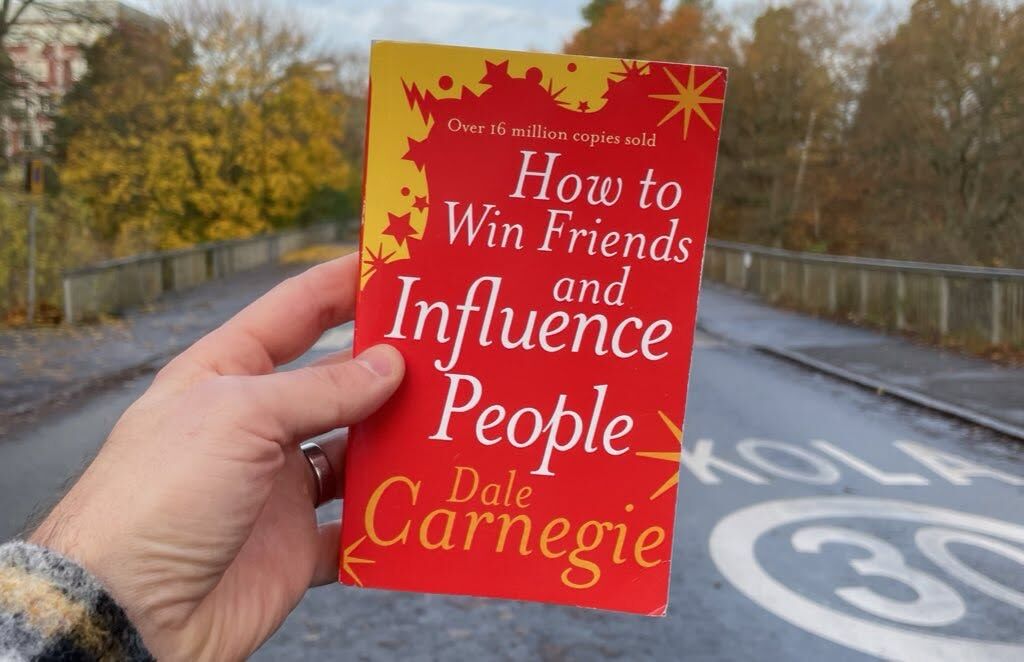
How to Win Friends and Influence People
The perfect gateway drug into nonfiction. 16 million copies sold, and still the best place to start with people skills.
Why Read It?
How to Win Friends and Influence People has been read by millions of people who want to get better at dealing with their fellow humans, improve their leadership, or simply get people onboard with their great ideas.
In this review I talk about why the book became so popular, who should read it, and, if you've already read it, whether it's worth reading again.
The History of the Book
Dale Carnegie was born Dale Carnagey. He changed the spelling to match industrialist Andrew Carnegie, a personal hero of his. He came from a simple family background and built a name for himself as a teacher, holding public speaking classes.
In 1936 he published How to Win Friends and Influence People, and it became his big breakthrough. The book summarized two and a half decades of teaching classes in public speaking and assertiveness. To say it was a success is an understatement: it has sold over 16 million copies to date.
His timing was perfect. The book landed on the shelves during the Great Depression and gave hope to a whole generation of discouraged businessmen who had watched their hopes and dreams crushed by the harsh economic climate. It has been a perennial bestseller ever since, and it's often suggested as the starting point for anyone who wants to get into self-improvement books.
About the Book
The book is a collection of simple, time-tested principles for becoming a better leader and a more influential person. Following them also makes social and professional interactions a lot more fun. A few of the principles:
Each principle comes with stories about business tycoons and thought leaders, showing how it has been used successfully.
Change Starts with You
People can be annoying, bossy and self-absorbed. It's easy to complain about it, but that's not very helpful. Be the change you want to see in the world, and start by improving yourself:
"Don't complain about the snow on your neighbor's roof when your own doorstep is unclean." (Confucius)
So what can you do to get better at dealing with people, get them to like you, and influence them? Become genuinely interested in other people.
"You can make more friends in two months by becoming interested in other people than you can in two years by trying to get other people interested in you."
People are interested in themselves. And most people who try to win others over to their way of thinking do far too much talking. Let the other person talk themselves out. They know more about their business and their problems than you do. Ask questions and let them tell you a few things. Listen, show appreciation, be lavish with your praise, and show them how they will benefit from what you're proposing.
📺 Video Review
Give People an Idea to Live Up To
One way to influence people is to set high expectations. Carnegie tells the story of a man who hired a helper for his home, and only afterwards learned from her references that she had done a sloppy job keeping things tidy for previous employers.
When she arrived to work, he told her what he'd heard: that she was honest and reliable and took good care of the children, but that some people said she was sloppy at keeping the home tidy. He said he didn't believe it. Seeing how neatly she was dressed, he found it hard to imagine, and he was sure the arrangement would work out just fine.
He raised the concern, but set the expectation by pointing to something she clearly excelled at, and expressing confidence that the same standard would carry over to the job. Give people an ideal to live up to, and watch them rise to it.
💡 Key Takeaway
Listen. Be sincere about it, be patient, and encourage people to express their ideas fully.
This was a personal lesson for me, since I've noticed myself being eager to interrupt people at work lately. Who will listen to me if I don't listen to others? I needed that reminder. We slip back into old patterns unless we keep reminding ourselves, and it can take several attempts before a new behavior sticks. If you want to go deeper on the art of listening, check out my review of You're Not Listening.
Is It Worth Reading?
At some point in life you realize that your current life strategy isn't going to work in the long haul. For me, that moment came when I finally got what I thought I really needed to be happy. I had landed the job of my dreams, and I still felt just as empty on the inside as before. I simply put up a new goal: if I only "got there," then I would allow myself to be happy. Realizing I was stuck in that loop, I started to read, because I understood I needed to update my mindset.
This book is perfect for someone starting out in life. Knowing and applying its principles will save you enormous amounts of time and headaches in your relationships, and it stays valuable throughout your life. People with social skills often outperform people who only have knowledge, in companies and in business. Skills matter, but world-class social and interpersonal skills are a rare competitive edge.
If you only read one book on social skills, let it be this one.
Is It Worth Re-Reading?
The book held tremendous value for me when I first read it eight years ago. But is it worth going back? Yes and no. A refresher on the concepts is great, but you don't need to reread the whole thing to get it. The internet is full of summaries, and you might as well save the time. And if you, like me, read a lot of psychology and personal development, there's really no need to return to it, because you already know and use the principles.
This book is for beginners, and it's a great one because of that. Easy to read, peppered with stories and anecdotes. The perfect gateway drug into the world of nonfiction.
⚖️ Verdict
A beginner's book, and one of the best. Simple, warm and full of stories, with principles that will pay off in every relationship you have. It loses a star only because if you've read widely in psychology already, there's little here you haven't met before. If you're new to nonfiction or to social skills, start here.
What Else to Read
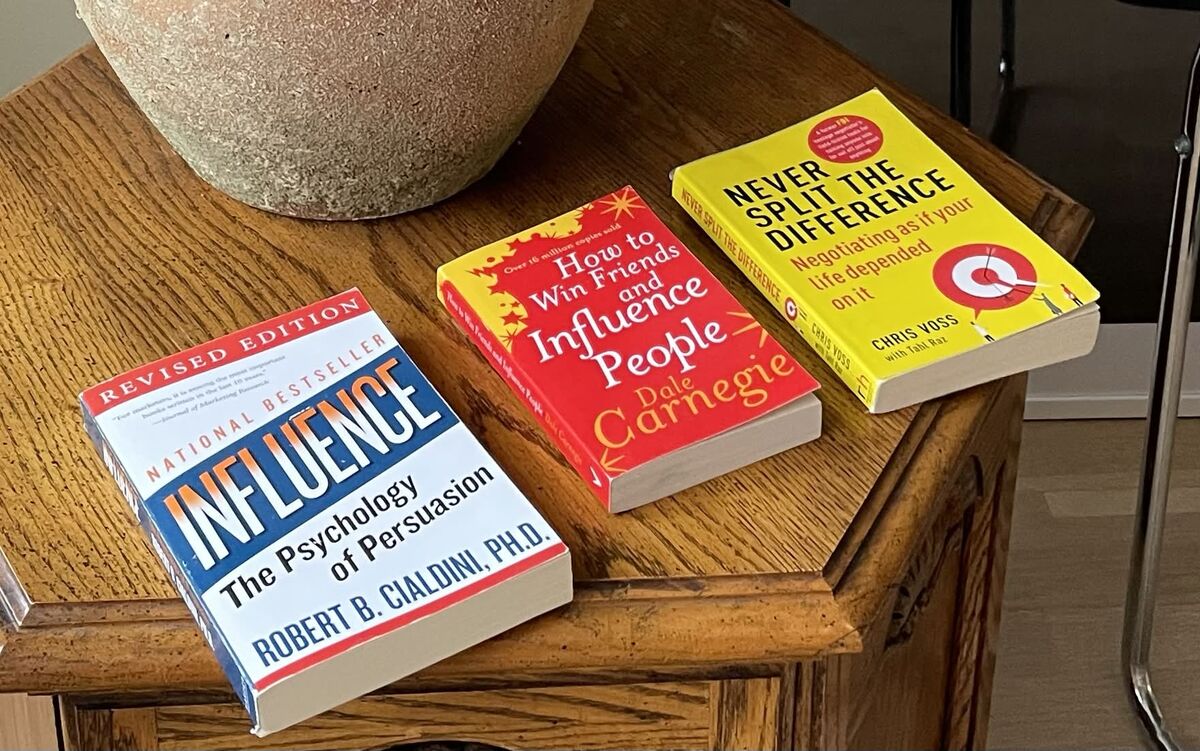
If you want to become more influential and persuasive, pair Carnegie with two modern classics: Robert Cialdini's Influence: The Psychology of Persuasion, which explains the science of why people say yes, and Chris Voss's Never Split the Difference, a former FBI negotiator's toolkit for everyday negotiation.